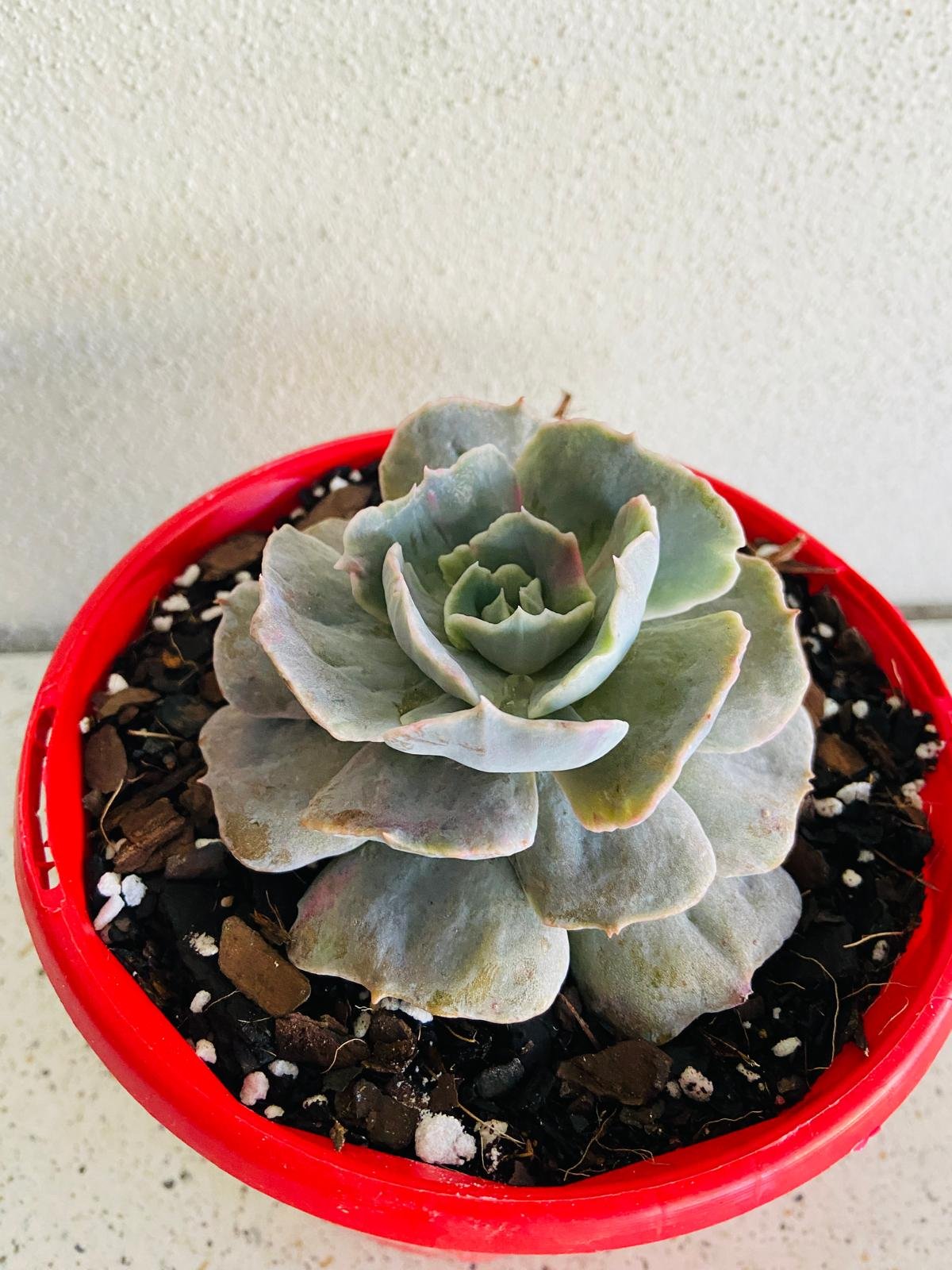
Echeveria Lilacina Monstrose 130mm
Echeveria Lilacina Monstrose 130mm
Plants are shipped bare root unless otherwise specified. Orders placed before Friday 6 AM (AEST) are shipped the following Monday, or Tuesday if Monday is a public holiday.
Couldn't load pickup availability
Rare Echeveria Lilacina Monstrose for Sale - Limited Collector's Edition
Discover the extraordinary Echeveria lilacina Monstrose, one of the most sought-after crested succulents in Australia. This rare monstrose mutation transforms the classic Ghost Echeveria into a living sculpture with unpredictable, fasciated growth patterns that make each plant genuinely unique. Featuring stunning silvery-lavender leaves with an ethereal powdery coating, this collector's succulent creates dramatic focal points in succulent arrangements, terrariums, and contemporary gardens. At just $19.90 for a 130mm specimen, this is an exceptional opportunity to own a rare genetic mutation that's highly prized by Australian succulent collectors. Limited availability - each plant is the exact one pictured.
About Echeveria Lilacina Monstrose - The Crested Ghost Echeveria
Echeveria lilacina Monstrose represents a fascinating genetic anomaly in the succulent world. While standard Echeveria lilacina (Ghost Echeveria) grows in perfect symmetrical rosettes, the monstrose variety exhibits fasciation - a rare growth mutation that produces sculptural, irregular forms resembling coral, brain-like structures, or abstract art.
What Makes Monstrose Succulents Special
The monstrose mutation causes abnormal cell division in the plant's growing point, resulting in unpredictable, distorted growth patterns. No two monstrose plants are identical - each develops its own unique architectural form over time. This rarity and individuality make monstrose varieties highly collectible and often significantly more valuable than their standard counterparts.
The Ghost Echeveria Base
The lilacina species provides the perfect foundation for this mutation. Known as "Ghost Echeveria" for its hauntingly beautiful silvery-lavender colouration, the plant features thick, spoon-shaped leaves covered in a delicate farina (powdery coating) that gives it an otherworldly, frosted appearance. The monstrose form amplifies these characteristics, creating twisted, sculptural shapes that shimmer with an iridescent quality in bright light.
Visual Appeal
The silvery-lavender foliage shifts in appearance throughout the day and seasons:
- Morning light: Soft powder blue with lavender undertones
- Full sun exposure: Intensified pink and purple stress colours
- Winter: Deeper lavender-grey with enhanced farina coating
The irregular growth creates natural shadows and depth, making this succulent a dynamic living sculpture that changes appearance from every viewing angle.
Collector's Value
Monstrose mutations are naturally rare in cultivation. Combined with the desirable Ghost Echeveria genetics, this variety commands attention from serious collectors worldwide. As the plant matures, the monstrose characteristics become more pronounced, increasing its sculptural appeal and collector value over time.
Complete Care Guide - Growing Echeveria Lilacina Monstrose in Australia
Light Requirements - Critical for Success
Echeveria lilacina Monstrose thrives in bright light to full sun, requiring 4-6 hours of direct sunlight daily for optimal colouration and compact growth.
Australian Climate Guidelines
- Spring/Autumn: Full morning sun, afternoon shade in hottest regions
- Summer: Protect from intense 12-3pm sun in QLD/NT; full sun okay in southern states
- Winter: Maximum sun exposure to maintain compact form
- Indoor Growing: Place within 30cm of south-facing windows or use grow lights
Insufficient light causes etiolation (stretching) and loss of the silvery colouration, while excessive afternoon sun can burn the delicate farina coating.
Watering Schedule for Australian Climates
The monstrose form requires slightly more water than standard echeveria due to increased surface area, but overwatering remains the primary killer.
Seasonal Watering Guide
- Summer (Dec-Feb): Water every 7-10 days when soil is completely dry
- Spring/Autumn (Mar-May, Sep-Nov): Water every 10-14 days
- Winter (Jun-Aug): Reduce to every 3-4 weeks; plant enters dormancy
Watering Technique
1. Check soil is bone dry 3-5cm deep
2. Water thoroughly at soil level until drainage holes run
3. Never water the rosette center - causes rot
4. Avoid getting farina wet - it won't regenerate if washed off
5. Water in morning to allow excess to evaporate
Signs of Overwatering: Translucent, mushy leaves; stem rot
Signs of Underwatering: Wrinkled, shriveled lower leaves (normal for oldest leaves to dry)
Soil Mix - Essential for Root Health
Use a gritty, fast-draining succulent mix with excellent aeration.
Recommended Mix Recipe
- 50% quality cactus/succulent potting mix
- 30% coarse sand or fine gravel (2-3mm)
- 20% perlite or pumice
Pre-Mixed Options: Look for mixes labeled "extra gritty" or "cactus mix"
Pot Selection: Always use containers with drainage holes. Terracotta pots are ideal as they allow soil to dry faster and prevent root rot.
Temperature Tolerance
Ideal Range: 15-28°C (perfect for most Australian homes and gardens)
Maximum Heat: Tolerates up to 38°C with adequate airflow
Minimum Cold: Protect below 5°C; frost will cause severe damage
Frost Protection: Move undercover or use frost cloth in winter
Echeveria lilacina Monstrose is more cold-hardy than many succulents but prolonged exposure below 5°C damages the farina and can cause leaf tissue damage.
Fertilizing for Healthy Growth
Feed sparingly - over-fertilization causes weak, leggy growth and reduces the coveted powdery coating.
Fertilizer Schedule
- Spring/Summer (Active Growth): Monthly with diluted liquid succulent fertilizer (quarter to half strength)
- Autumn: Reduce to every 6-8 weeks
- Winter: No fertilization during dormancy
Best Fertilizer Types
- Low-nitrogen formulations (5-10-10 or 2-7-7)
- Liquid seaweed or fish emulsion (diluted)
- Specialized succulent fertilizers
Repotting Guide
Repot every 2-3 years or when root-bound, ideally in spring.
Repotting Steps
1. Allow soil to dry completely for 5-7 days before repotting
2. Gently remove plant and inspect roots for rot (brown, mushy)
3. Trim dead roots with sterilized scissors
4. Allow to air dry for 2-3 days if roots were wet or damaged
5. Plant in fresh, dry mix
6. Wait 7-10 days before first watering to allow root establishment
Propagation Methods
Monstrose varieties are propagated vegetatively to maintain the mutation.
Propagation Techniques
1. Offsets (Most Reliable): Gently separate pups when 3-5cm diameter
2. Stem Cuttings: Cut below a node, allow to callus 3-5 days, plant in dry mix
3. Leaf Propagation: Success rate lower with monstrose forms; may revert to normal growth
Important: Seed propagation will NOT produce monstrose offspring - the mutation must be maintained through cuttings.
Pest Management
Common Pests
- Mealybugs: White cottony masses in leaf axils - treat with isopropyl alcohol on cotton swab
- Aphids: Tiny insects on new growth - spray with diluted neem oil
- Scale: Brown bumps on leaves - physically remove and treat with horticultural oil
Prevention
- Quarantine new plants for 2 weeks
- Ensure good airflow around plants
- Avoid overwatering which attracts fungus gnats
Disease Prevention
Root Rot: Primary killer of echeveria - caused by overwatering and poor drainage
Powdery Mildew: Rare in echeveria; ensure good airflow
Stem Rot: Water at soil level only, never on rosette center
Maintaining the Farina (Powdery Coating)
The silvery coating is a natural sunscreen and water-repellent layer that, once damaged, will not regenerate on existing leaves.
Protection Tips
- Handle plants by the root ball or pot, never touch leaves
- Don't wash or spray leaves
- Protect from rain and overhead watering
- Keep away from high-traffic areas where leaves might be brushed
What Are Monstrose and Crested Succulents?
Monstrose and crested growth are fascinating genetic mutations that occur rarely in nature and cultivation, making these plants highly prized by collectors.
Fasciation Explained
The monstrose mutation results from fasciation - abnormal growth in the plant's apical meristem (growing point). Instead of producing the typical symmetrical rosette pattern, cells divide unpredictably, creating:
- Irregular, coral-like structures
- Brain-shaped growth patterns
- Twisted, sculptural forms
- Layered, ruffled leaf arrangements
Monstrose vs. Crested
While often used interchangeably, there are subtle differences:
- Monstrose: Irregular growth throughout the plant, creating lumpy, distorted forms
- Crested (Cristate): Fan-shaped or brain-like growth along a line, creating rippled, wave-like patterns
Many plants exhibit characteristics of both, as with this Echeveria lilacina Monstrose.
Why Are They Rare?
These mutations occur spontaneously and unpredictably:
- Only 1 in thousands of plants naturally develops fasciation
- The mutation can't be induced reliably
- Can't be reproduced from seed - only vegetative propagation maintains the trait
- Some cuttings may revert to normal growth patterns
Collector Appeal:
- Each plant is genuinely unique - impossible to replicate
- Rarity drives value and desirability
- Mature specimens become increasingly sculptural and valuable
- Limited availability creates strong demand
Investment Potential
Well-grown monstrose echeveria can appreciate significantly in value as they mature and develop more dramatic forms. Collectors actively seek established specimens with pronounced fasciation.
Want your succulent with a pot?
We usually ship bare root for freshness and to keep costs low, but we’re happy to pot your plant on request!
Frequently Asked Questions About Echeveria Lilacina Monstrose
Is Echeveria lilacina Monstrose rare?
Extremely rare. Monstrose mutations occur in less than 0.1% of echeveria plants naturally, making this highly collectible.
Will my monstrose Echeveria stay monstrose?
Usually yes. The mutation is stable, though some parts may occasionally revert to normal growth.
Why is this variety more expensive?
Monstrose mutations can't be produced artificially. Each plant is genuinely unique, and collector demand is high.
How do I know if my plant is truly monstrose?
Look for irregular, unpredictable patterns—distorted rosettes, coral-like structures, or twisted growth. No two plants look alike.
Can I propagate Echeveria lilacina Monstrose?
Yes, through offsets (pups) or stem cuttings. The monstrose trait usually continues in propagated plants.
Just click here to make your request.
Please note — NT, TAS, WA customers: please contact us before placing your order due to additional quarantine charges associated with these locations. View Shipping options
Share